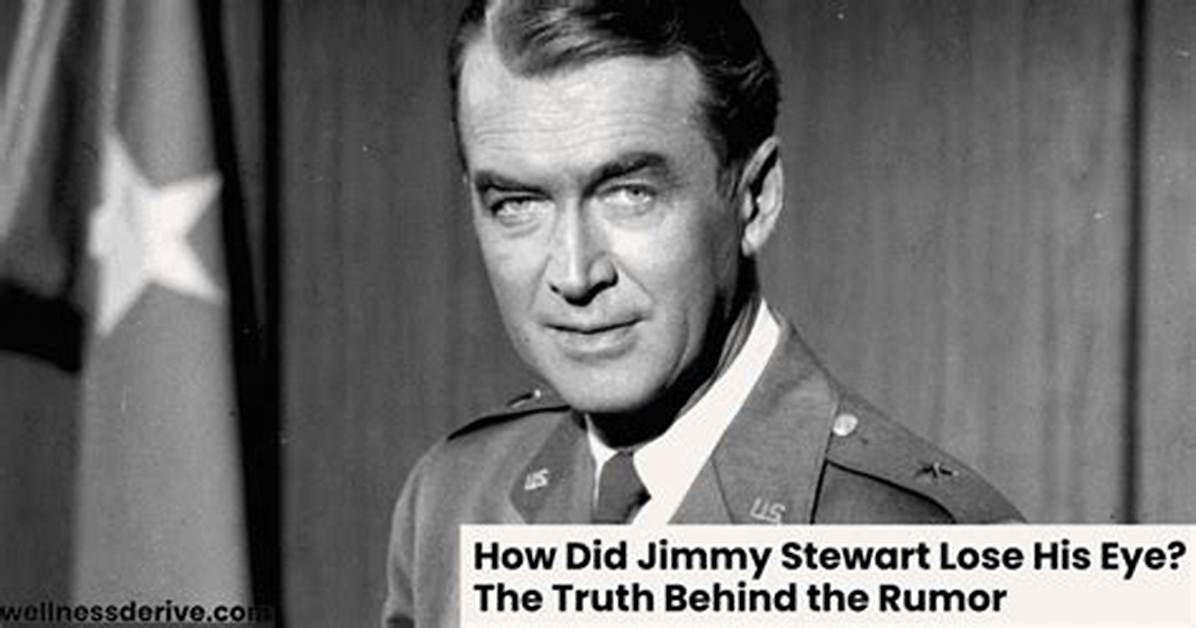
Jimmy Stewart, an iconic figure in American cinema, is well-known for his remarkable acting career and distinctive voice. However, many fans are often curious about the circumstances surrounding his eye loss. This article delves into the life of Jimmy Stewart, exploring the details of his eye condition and the impact it had on his personal and professional life. Understanding his journey not only highlights his resilience but also provides insight into the life of one of Hollywood's most beloved stars.
As a celebrated actor, Jimmy Stewart starred in numerous classic films, earning critical acclaim and a loyal fan base. His career spanned several decades, during which he became synonymous with roles that showcased his unique blend of charm and sincerity. However, beyond his on-screen persona, Stewart faced personal challenges, including his eye condition, which significantly influenced his life.
In this article, we will discuss the details of how Jimmy Stewart lost his eye, the medical conditions that led to it, and how he coped with the changes. We will also explore his biographical background, career highlights, and the legacy he left behind. By the end, readers will have a comprehensive understanding of Jimmy Stewart's life, both on and off the screen.
Biography of Jimmy Stewart
| Attribute | Details |
|---|---|
| Name | James Maitland Stewart |
| Date of Birth | May 20, 1908 |
| Place of Birth | Indianapolis, Indiana, USA |
| Date of Death | July 2, 1997 |
| Occupation | Actor, Director |
| Notable Films | It's a Wonderful Life, Vertigo, Rear Window |
| Awards | Academy Awards, Golden Globe Awards |
Early Life and Career
Jimmy Stewart was born in Indianapolis, Indiana, and grew up in a close-knit family. He showed an early interest in music and acting, participating in local theater productions during his school years. After graduating from Princeton University with a degree in architecture, Stewart moved to New York City to pursue a career in acting.
His big break came in the late 1930s, and by the early 1940s, he was a major star in Hollywood. Stewart's unique voice and relatable persona resonated with audiences, making him a favorite in films such as "Mr. Smith Goes to Washington" and "The Philadelphia Story." His career flourished, but it was marked by personal challenges, including the eye condition that would later affect his life.

